
MAZON, USDA, and Partners Celebrate Sukkot in Washington DC
Last week, MAZON staff joined with our longtime friends and partners at the United States Department of Agriculture (USDA) for their second annual Sukkot celebration. The event, put on by USDA’s Center for Faith-Based and Neighborhood Partnerships, took place in a Sukkah that was built on the National Mall in Washington, DC.
During the event, which was attended by a wide range of government officials, advocates, and leaders in the Jewish community, special attention was paid to the importance of highlighting agriculture and food security during Sukkot and throughout the year. In addition to MAZON’s Vice President of Public Affairs Liza Lieberman, speakers included Ambassador Deborah E. Lipstadt, Special Envoy to Monitor and Combat Antisemitism; Melissa Rogers, Director, White House Office of Faith Based and Neighborhood Partnerships; Samantha Joseph, Director, USDA Center for Faith-Based and Neighborhood Partnerships; Rob Newman, Chief Operating Officer, Met Council; and a dedication by Cantor Jason Kaufman of Beth El Hebrew Congregation in Alexandria, VA.
As part of her remarks, Lieberman stated that:
The festival of Sukkot offers an opportunity to consider themes like harvest, family, community, scarcity, peoplehood, and food justice. Traditionally, we are taught to extend an invitation to the needy members of our community to join us in the Sukkah. Whether symbolically or more literally, Sukkot is the perfect time to share your hospitality and good fortune to help improve the lives of the most vulnerable among us.
Eradicating hunger is a moral imperative that can only be addressed through sound policy and vigilance. We will continue working with our partners around the country — Jewish communities, anti-hunger advocates in some of the most food insecure regions, and interfaith partners, and more — to expand access to social safety net programs, destigmatize government-sponsored assistance, and change the narrative about who struggles with hunger and why.
MAZON was proud to sponsor this year’s event, alongside valued partners including the Anti-Defamation League, the American Jewish Council, the Capital Jewish Museum, the Jewish Federations of North American, and Met Council.
-

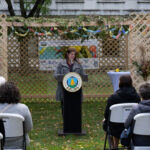
- Liza Lieberman, MAZON’s Vice President of Public Affairs, speaks at the USDA gathering(USDA photo by Christophe Paul)
-
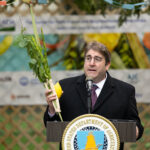
- Cantor Jason Kaufman, Beth El Hebrew Congregation, dedicates the Sukkot and delivers some remarks during the 2024 USDA Sukkot Celebration.(USDA photo by Christophe Paul)
-
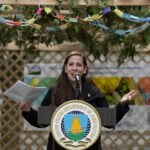
- Samantha Joseph, Director, Center for Faith Based and Neighborhood, delivers some remarks during the 2024 USDA Sukkot Celebration (USDA photo by Christophe Paul)
-
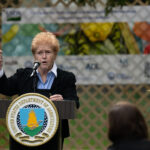
- Ambassador Deborah E. Lipstadt, Special Envoy to Monitor and Combat Antisemitism, Office of the Special Envoy to Monitor and Combat Antisemitism, U.S. Department of State. (USDA photo by Christophe Paul)
-
- MAZON staff gather in the USDA sukkah.

-
- Liza Lieberman, MAZON’s Vice President of Public Affairs, and Helene Kessler, State Department join in the festivities.

Lieberman’s remarks in full can be found below:
Good afternoon and Shana Tova. Thank you to Ambassador Lipstadt, Melissa Rogers, Samantha, and all our friends at USDA and our incredible partner organizations for helping put together today’s remarkable program.
My name is Liza Lieberman, and I am Vice President of Public Affairs at MAZON: A Jewish Response to Hunger.
MAZON was founded 40 years ago on a central belief and every person — regardless of circumstance — must be able to feed themselves and their families. We are guided by central Jewish values of tzedek (seeking justice) and b’tzelem Elohim (respecting the inherent dignity of every person) in our work to end hunger in the U.S. and Israel.
We find it shameful that — according to recent figures from USDA — over 47 million Americans face food insecurity. No person, regardless of circumstance, deserves the pain and indignity of hunger. The federal government fulfills this moral calling and our collective responsibility to care for those among us who struggle with hunger.
That’s why we are so grateful to our friends and partners at USDA who work to run programs that allow millions of Americans to feed themselves and their families. We know that nutrition safety programs — like SNAP, WIC, school meals, and so many others — are critical and effective tools to reversing the course of hunger in this country.
The festival of Sukkot offers an opportunity to consider themes like harvest, family, community, scarcity, peoplehood, and food justice. Traditionally, we are taught to extend an invitation to the needy members of our community to join us in the Sukkah. Whether symbolically or more literally, Sukkot is the perfect time to share your hospitality and good fortune to help improve the lives of the most vulnerable among us.
This Sukkot also comes during a time when our political leaders are offering competing proposals to address poverty and hunger in America. So, leaning into the great Jewish tradition of asking questions, I invite you to consider: Should we stigmatize the hungry, force onerous restrictions upon them, and make them jump through bureaucratic hoops in order to get help from their government? Or, should we support and protect them from the pain and indignity of hunger?
Eradicating hunger is a moral imperative that can only be addressed through sound policy and vigilance. We will continue working with our partners around the country — Jewish communities, anti-hunger advocates in some of the most food insecure regions, and interfaith partners, and more — to expand access to social safety net programs, destigmatize government-sponsored assistance, and change the narrative about who struggles with hunger and why.
We will continue working to remove obstacles facing particular groups — including military families, college students, single mothers, Indigenous communities, veterans, LGBTQ seniors, and the people of Puerto Rico. We will keep fighting for food security, equity, and justice until hunger becomes a relic of the past.
There is still so much work to be done. But today, in this season of reflection and renewal, I am grateful to be here with all of you — proudly centering our Jewish values right here on the National Mall and recommitting to pursuing justice.
Thank you, and Chag Sameach.